By Aileen Brenner Houston
What challenges do military students face with academic writing, and how can we work through them at the writing center?
Exploring the narratives and myths surrounding writing conventions at the Naval Postgraduate School with Graduate Writing Center Coach Abby McConnell.
In terms of writing, there’s a myth that you either know how to do it or you don’t. That you have the skill set and it’s not one you can grow…. The gray area is really difficult for all these students, and the process of writing is so mysterious.
— Abby McConnell, Graduate Writing Center Coach, Naval Postgraduate School
In my five and a half years as a writing coach and thesis processor at the Naval Postgraduate School, I’ve come across a wide array of student writers, who bring with them a wide array of personal narratives. I’ve met with the resolute infantryman who sits down confidently at my workstation and admits with smiling bravado, “I can’t write. Do your best with me.” I’ve met published poets who can manipulate the English language in a million beautiful ways, but who stumble over scientific studies. I’ve met with expectant mothers stretching their Dress Whites, and Turkish officers whose families are back home amid a political crisis, and fire chiefs who are called away from papers to tend to a blaze.

Abby McConnell has been my colleague as a full-time writing coach at NPS’s Graduate Writing Center for six months, and the military culture is new to her. But her vast professional work with college students has prepared her well to navigate NPS’s crowd of military and government folks from around the world. All college students, she says, regardless of their age, station, or walk of life, face the same challenges with time management. NPS students are no exception as they juggle their military and government lives with their new school duties—and with their families, who they have often uprooted for this journey of higher education.
Abby’s specialty is helping students chunk out time and, importantly, motivation to work on their writing amid the structured chaos.
It’s common that a new student at NPS has not written an academic paper in ten to fifteen years, Abby reminds me. I think back to my first days as a writing coach, and I, too, remember the students’ visceral uneasiness. It’s easy for me to forget that these students’ graduate programs are brief, and they haven’t had the dedicated years that I’ve had to get comfortable with the cold ivory tower of academia. It’s intimidating for them, Abby says, because the skill sets and the culture of the academy are so far removed from their typical lives. Military and government culture—battlefield culture, even—makes sense for these students, but academic culture is uncomfortably foreign terrain.
“A lot of them come here and they’re immediately overwhelmed because they’re told it’s gonna be easy,” Abby explains. “And, I mean…easy compared to being shot at, maybe, but it’s just an entirely different culture and world, and they’re not sure what to cling to when they get here.”
The students have entered what language expert Mary Louise Pratt calls a contact zone: a place where cultures clash, particularly when it comes to linguistic and writing norms. For NPS students, professional writing until this point has meant memos and emails. Terse reports. Copied-and-pasted directives and instructions. Now, however, it means policy analysis. Experiment write-ups and literature reviews. Personal reflections. And, for almost all students, it means a thesis or dissertation, which is published publicly on the internet and shared with academics and their command teams alike.
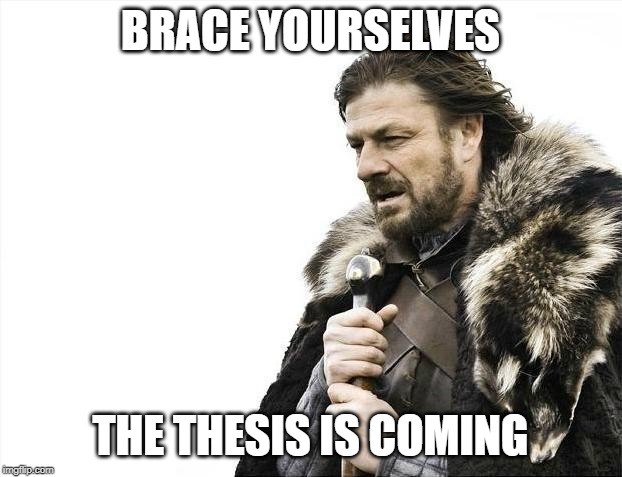
Because NPS is a graduate school, all the students have a bachelor’s degree under their belts. But, as Abby mentions, that degree was typically achieved many years ago, before their military or government service began. Sometimes it required little to no writing, and sometimes the degree was from a hands-off program that provided scant feedback. And writing centers at undergraduate military institutions may be dealing, too, with a wider student body of basic writers.
Students at NPS, like their undergraduate counterparts at other military institutions, struggle to understand academic voice, and how it can be used to describe their national security work. Particularly when those worlds seem so far removed. Abby finds that students struggle, especially, with understanding what analysis is, how to structure an argument, how to craft a thesis statement, and how to incorporate source material with their own ideas.
“I tell them it’s like learning another half of a language … or at least another system they have to master,” says Abby.
One block to learning that system, however, is the myths about academic writing the students bring with them.
When Writing is Nonrational: Countering Myths and Crafting New Narratives
When faced with the nonrational, Craig R. Smith says that we create myths to help us make sense of our surroundings. And for many college students, writing is certainly the stuff of the nonrational.
“You … run into the myth that there’s a formula you can give them: how to write a paper, how to create an argument,” Abby says. “The gray area is really difficult for all these students, and the process of writing is so mysterious.”
“In terms of writing,” she continues, “there’s a myth that you either know how to do it or you don’t. That you have the skill set and it’s not one you can grow.”
According to Smith, myths are based on forces beyond human control (21). So when students’ attitudes toward writing ascribe to this binary, it takes the pressure off: I’m just a bad writer, they believe; no point in fighting it.
At the writing center, however, we remember another of Smith’s guiding principles of myths: while their forces may be beyond human control, humans can control their interpretation.
Countering students’ myths about writing, Abby says, involves “getting them to put something on paper and giving them permission to write a shitty first draft.” She reminds them that what shows up on the page will never completely match what was in their head, but that writing and rewriting will get them closer. “I’m very honest,” she says. “It’s going to suck, and you have to spend a lot of time.”
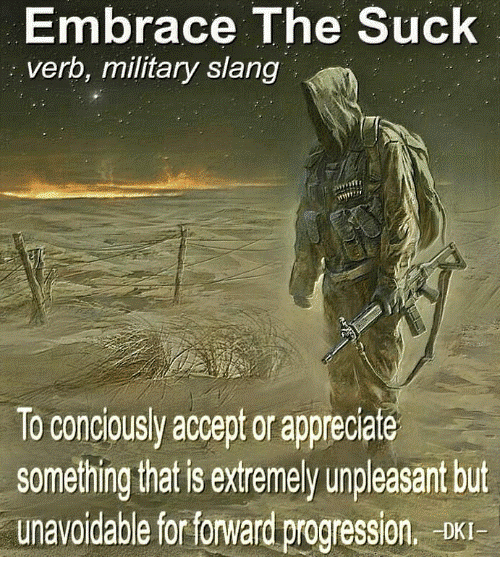
So, at the writing center, we work to create new narratives with the students—ones that build confidence and shed the myths that hinder learning and performance.
“We function to hopefully help them become better thinkers and better writers, and in doing so they gain confidence in that area,” Abby says. “But I believe we can [also] be a neutral sounding board, a place without judgement where they can come … to have conversations and get help. All these guys are separated from their platoon or their unit, and they’re upended and dropped here. I think it’s important for them to be able to ask for help, even though that’s not a military norm.”
While Abby finds that students have typically shed the this-will-be-easy myth after a few weeks, the asking-for-help-is-a-sign-of-weakness myth takes longer to overcome. Getting students comfortable with the norms and conventions of this new world, particularly the writing conventions, in large part means helping them understand their new multifaceted audiences—and navigating their audiences’ biases, as well as their own.
An Academic Audience
Abby finds that students’ biggest challenge is “unlearning the military way of writing,” which relies on heavy use of acronyms and short sentences, and provides little context. The U.S. Army, for instance, advises that effective writing “is understood by the reader in a single rapid reading and … will be concise, organized, and to the point” (Preparing and Managing Correspondence 6). Similarities aside, discussed in my next post, this is a far cry from the style of a well-developed academic argument.
Early student drafts, Abby says, are often condensed and missing “connectors.” And according to famed management consultant Peter Drucker, this is a cardinal sin of effective communication. If the audience has no context—if the writing is not within “the recipient’s range of perception” (262)—communication is doomed from the get-go.

As a writing coach, Abby understands this innately. “They’re [used to] writing to an audience that already has a common understanding. We have to break them out of that and help them write to readers who have no context for what they’re writing about.”
This goes for both sides of our students’ audience: the military side and the academic side. In their writing, our students must mediate these two cultures to align, as Drucker puts it, their perceptions, expectations, and demands.
To attune to these audiences, our students must be sensitive to their diverse viewpoints. And it’s not just that the viewpoints themselves are diverse or polarizing; it’s that, within the community, those diverse and polarizing viewpoints affect each other and create a different, more global, dynamic. Doreen Starke-Meyerring, a professor of education, calls this a phenomenon of “globalized identities” (474).
Writing as Cultural Mediation
Pratt, in her ruminations on linguistic cultural clashes, believes that our job as teachers and instructors is “to figure out how to make that crossroads the best site for learning that it can be” (40). Storytelling, she says, and therefore its connection to our students’ globalized identities, is part of that. Abby agrees.
“All the research on wars [at NPS] is important,” Abby tells me, “but the [assignments that students] get more out of are the few personal reflective essays they have to write. It’s always some of the most interesting stuff I’ve read about their own journey and their own history with writing.”
Navigating this contact zone between military and academia through personal writing, if we take Pratt’s advice, helps students and their readers “engage with suppressed aspects of history (including their own histories)” (40).
“A had a great [paper] from a student from Georgia, the country of Georgia, that is,” Abby recalls, “who wrote about how his language is like poetry and doesn’t really have a linear way about it. He used to write poetry … from the warfront. It helps them reflect and take a moment to see where they are and where they’ve been, which is important for everybody.”
Linguist Deborah Cameron, too, believes that when writing lessons embrace a “culture of self-improvement” and lean on honest, nonjudgmental disclosure, communication improves (74–75). This engagement with intimate ideas in an academic setting strengthens students’ written voices but also familiarizes them with “ground rules for communication across lines of difference and hierarchy” (Pratt 40)—an important lesson for students who will need to write for global communities that include their professors, peers, academics, policymakers, and national and international partners.
And, according to Pratt, the benefits of these “rhetorics of authenticity” go beyond the student writer. They provide what she calls “cultural mediation” (40).
NPS is home to military and government professionals from the United States but also from nations across the globe—from Saudi Arabia, to Mali, to Greece and Argentina and Indonesia and Germany. Faculty and students from a diverse range of cultures meet at NPS to learn, and write, together.
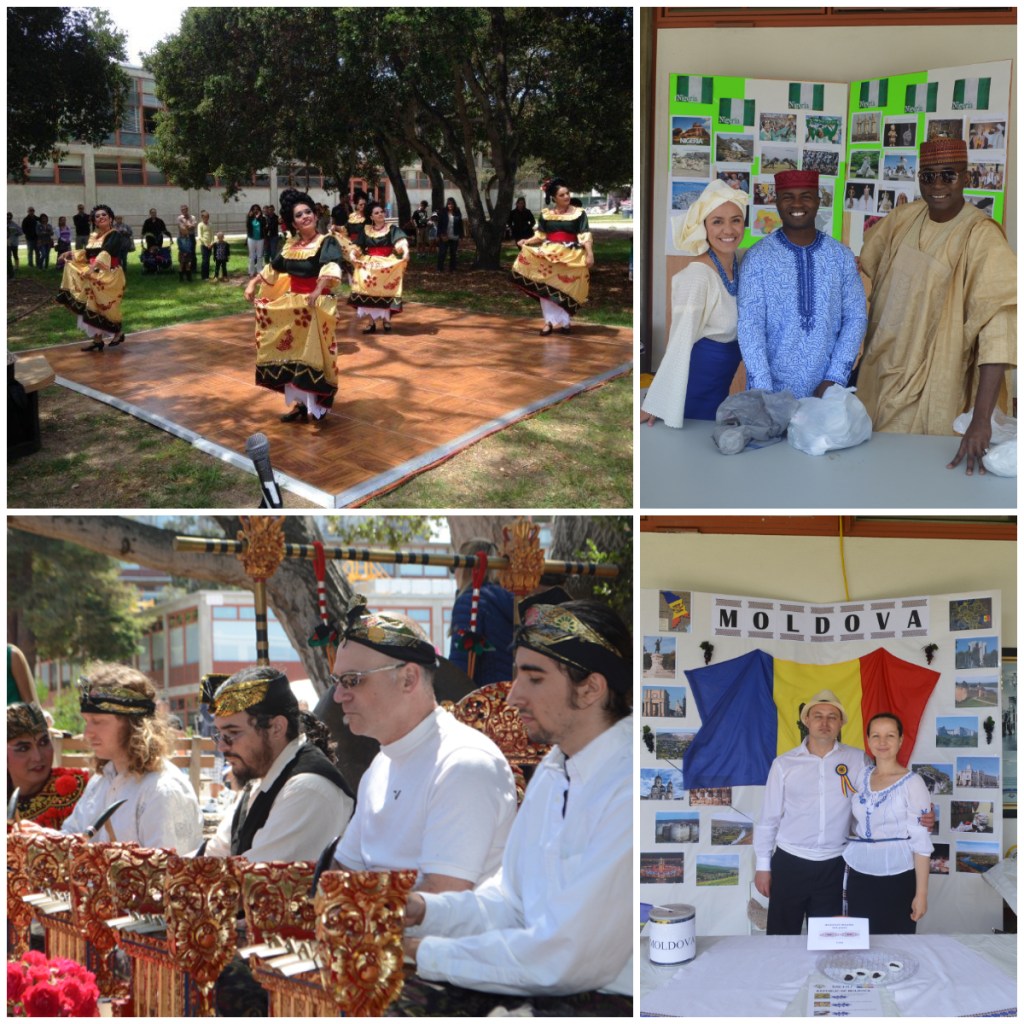
At the writing center, Abby says she’s “hyperaware of the cultural differences,” particularly when it comes to writing conventions. “I try to figure out where the student’s coming from culturally, or writing-wise or storytelling-wise. I’ve had a couple students tell me that putting something bottom-line-upfront like we do in academic papers is culturally not how you’d write something in, say, Uganda. I try to think about that as I coach them. Again, they are learning this strange little language of this specific way of writing.”
Starke-Meyerring also explains how the prevalence of digital networks and internet-based genres, too, has expanded the audiences and cultures that access, and participate in, our writing. This is no different in academic writing, particularly for NPS students, whose thesis and dissertation research is published online. We must therefore, as Starke-Meyerring puts it, “understand how to connect and communicate”—how to engage our various stakeholders—“across diverse cultural contexts” (476).
Abby says she’s “at a loss for words sometimes because, how do you talk about this to somebody who’s grown up in Uganda? Sometimes you don’t. You just listen…. I try to get them to tell me that story—why it matters or what their experience has been—and be supportive [so] that they feel like their work here is purposeful, and hopefully effecting change and making some kind of contribution in their home country.”
Beyond the Writing Center
For military and government students, however, writing goes far beyond the academic world or the context of the country.
“Our communication today isn’t face to face,” Abby says. “It’s email, or in the military it’s memos or executive summaries. So [our students] have to be able to write clearly and succinctly with some kind of flow and structure so that their higher-ups can understand and they can keep things working and moving.”
The tenets of academic writing—for instance, clarity, conciseness, logical organization, and sound arguments—are the same tenets of effective communication in any organization. And the lessons we impart at the writing center remind students to think critically about their message and their audience, with an eye for problem-solving. Abby believes that students’ work to improve their writing at NPS will make them better communicators in general, which in turn will make them more valuable to their command teams, and therefore more promotable. Not to mention the benefits at home.
“Once you can clearly write a paper,” Abby says, “you’re going to be more articulate…maybe you can even communicate better with your wife.”
Works Cited
Cameron, Deborah. “Golabalization and the Teaching of ‘Communication Skills.’” Globalization and Language Teaching, edited by David Block and Deobrah Cameron, Routledge, 2002, pp. 67–82.
Drucker, Peter F. The Essential Drucker: The Best of Sixty Years of Peter Drucker’s Essential Writings on Management. Harper, 2008.
Pratt, Mary Louise. “Arts of the Contact Zone.” Profession, 1991, pp. 33–40.
Preparing and Managing Correspondence. Army Regulation 25-50. Department of the Army, 2013.
Smith, Craig R. Rhetoric and Human Consciousness: A History. 4th ed., Waveland P, 2013.
Starke-Meyerring, Doreen. “Meeting the Challenges of Globalization: A Framework for Global Literacies in Professional Communication Programs.” Journal of Business and Technical Communication, vol. 19, no. 4, Oct. 2005, pp. 468–99.
The views expressed on this website are the author’s alone. They do not reflect the views of the Naval Postgraduate School.
 writingforseapower.water.blog
I enjoyed the overall approach and how you defined the terms for both non-military and military audiences. Your articles resonate especially with me as I can understand both types of audiences and the challenges associated with them. Perhaps to increase your audience reach, you could present branch-specific writing topics that can be integrated into your blog. I think this would speak large and far to your audiences.
Your use of popular memes throughout your article helped maintain my energy level as a reader who often appreciates shorter articles when reading online (mainly due to screen glare; not an issue with print books). Your use of military slang as well helps connect to your audience by offering familiar terminology.
One especially interesting part of your writing (for me) was the new perspective I learned about in terms of the Naval Post Graduate School. I like to see and learn from different view points and you hit the head on the nail. Thank you.
Steven L.
LikeLike